Choose the door seal you need
Door seals are fittings installed on the sides of doors and windows to seal them, thereby preventing temperatures, dust, and dirt from entering or escaping. It is a widely used and highly recommended solution, especially during periods of low temperatures when keeping your home warm and protecting yourself from the outside cold is a priority. For this, there are different solutions that we will look at below:
Types of door seals
Adhesive seal
The adhesive seal is the most installed seal for doors. It is placed on the bottom (which is usually the part with the most clearance) and uses a bristle brush or a silicone rubber strip that extends to touch the floor and seal against the entry and exit of dust and temperature. It is an easy-to-install seal; you just need to stick it at the necessary height on the door, and it is generally durable enough to withstand high intensity of use.
Screw-on seal
The screw-on seal offers the same functions as the adhesive one, although, naturally, the attachment to the door is even stronger, if possible.
Mortise seal
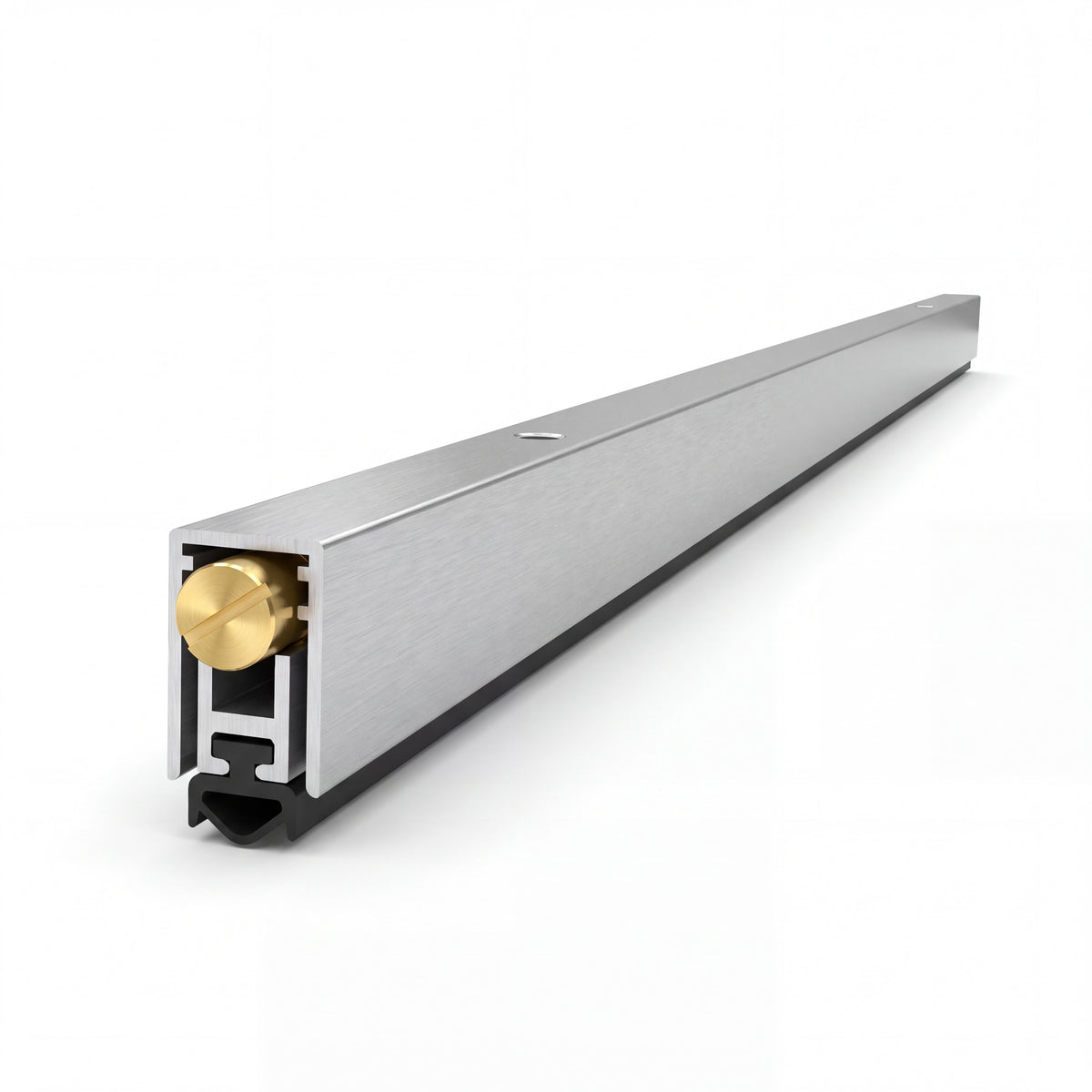
The mortise seal is the most aesthetic of all. This seal, which is difficult to install, is placed at the bottom of the door by embedding it into the center of the board. When the door is closed, a button is pressed that automatically deploys the seal, blocking the gap. Conversely, when the door is opened, the button is released, the rubber retracts, and the door operates correctly. A highly recommended solution if you have the necessary tools to install this type of seal.
Slide-on seal
Finally, there is the slide-on seal. This basic seal consists of two rollers joined by a piece of fabric that slides under the door and moves along with it. The advantage is that you can manually remove and replace it whenever you want, and it allows you to move it to different doors or place it on wider or narrower doors by trimming it with a utility knife.
Types of window seals
Adhesive silicone seal
You can also install this type of seal on doors, although most windows should have it. It is a long, flexible, and trimmable seal that, with a powerful adhesive, is placed along the edge of the entire window so that when it closes, it presses down, sealing your home much better. There are different shapes depending on the type of window and the clearance between the window and the frame. Even so, most of the time any of the ones we offer will work for you. Consult our catalog to see which window seal fits you best.
Push-fit gasket seal
This seal usually comes installed from the factory, but in case it ever breaks or the rubber is damaged, it is worth explaining that it is a seal that fits (as its name suggests) into a rail that comes standard with the window. Its function is the same as the adhesive one, although it is installed more firmly.