
More types of cylinders



Recently viewed
Discover the types of door lock cylinders
There are countless different types of lock cylinders, each with its own particular characteristics. We are going to look at what security features a cylinder can have and how to know what level of security you need. You must start from the premise that higher security is always better, although it is true that for an entrance to a communal building or a pantry, it is not necessary to protect access with the best lock cylinder. Even so, take into account the following security elements and their functionality to know what you need:
Anti-bumping lock cylinders
Anti-bumping is part of an essential and basic security feature in a lock cylinder. These cylinders have protection that prevents a thief from striking the key once it is inserted into the cylinder, which would break its internal mechanism and allow them to turn the key. Currently, most cylinders are anti-bumping.
Anti-pick lock cylinders
The anti-pick system in cylinders is also considered a basic security element. This is an internal metal protection that prevents the internal mechanism of the cylinder from being manipulated from the outside. A lock pick allows the door to be opened through subtle manipulation of the cylinder, and therefore it is also a primary characteristic of any cylinder that meets a minimum standard.
Cylinder with dual clutch
This relates not so much to security but rather to peace of mind. The dual clutch of a cylinder allows you to open the door even if a key is inserted on the other side. When a cylinder does not have a dual clutch and you forget the key inside, you will not be able to operate the cylinder and will have to remove the key first.
Anti-drill lock cylinder
In general, any dimple key cylinder will have an anti-drill plate, while a standard serrated key cylinder will not. Anti-drill protection, as the name suggests, prevents the cylinder from being drilled into to destroy its internal mechanism and operate it easily.
To this end, right where the key is inserted, there will be a metal reinforcement that prevents any drill from destroying it, thereby increasing the security of the door and your home. It is a recommended protection if you are looking for security and peace of mind.
Anti-hammer lock cylinders
The cylinder is anti-hammer, protecting itself from any impact using the same plate that protects against drilling. If the cylinder you have installed in your lock is anti-drill, it will also be anti-hammer.
Anti-snap lock cylinder
An anti-snap cylinder is a tough cylinder made with resistant materials to prevent it from being broken by brute force. This security system works in layers that protect the mechanism, and when the cylinder is attacked, these layers break without affecting the cylinder's operation. It significantly makes access to the home difficult, and depending on the number of layers it has, it will be more or less difficult to breach.
Anti-tamper lock cylinder
This security element means that the connection is made of reinforced steel, thus preventing the extraction of the cylinder using pliers or other tools. It comes prepared to be fixedly installed in the door and make your home much more secure.
How to choose the ideal security cylinder for your doors?
The security of a lock cylinder is key, but if the cylinder measurements do not fit, the cam is not the right size, the cylinder lacks a protective security escutcheon, or it does not have the proper design, you will not have a useful product. That is why we are going to look at what things you should pay attention to when choosing which type of cylinder your locks need.
Cylinder shape
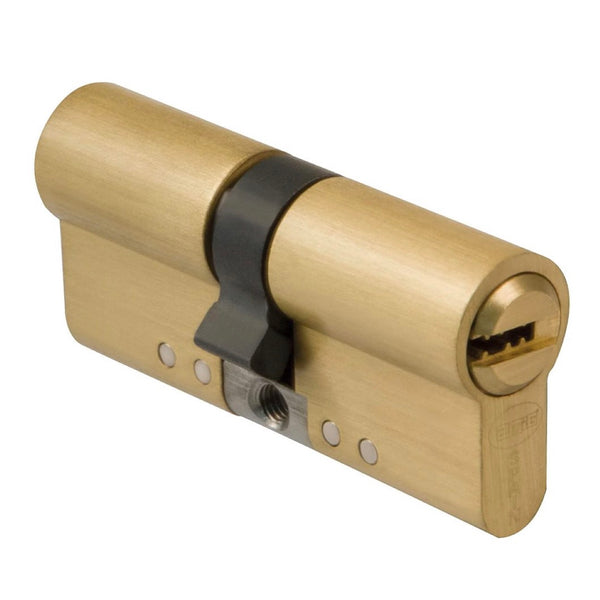
The profile of the cylinder can come in different shapes. The most typical is the European profile (pear-shaped) cylinder. This is the most typical and the most common on the market. Then we can also find cylindrical (round) shapes, which are not as common and come in different diameters, and oval-shaped cylinders.
Cam length
The cam can be short (13.5mm) or long (15mm). Normally, locks use a long cam cylinder, except for some specific locks manufactured for metal doors that may use a short cam. If you have a wooden door, your cylinder should have a long cam; however, if you have a metal door, we recommend removing the cylinder from the lock to check the cam size so as not to make a mistake when ordering.
Cylinder measurement
There is a wide variety of different lengths, which will depend on the thickness of the door and the type of lock, meaning you may need one measurement or another. The thing you must keep in mind is to never choose a cylinder shorter than the width of the door.
With this in mind, you should also consider buying a cylinder that is slightly longer on one side if you have an offset lock. The way to find the measurement is to measure the thickness of the door. To be precise and avoid errors, we recommend removing your cylinder to measure the dimensions to both sides.
Protective escutcheon
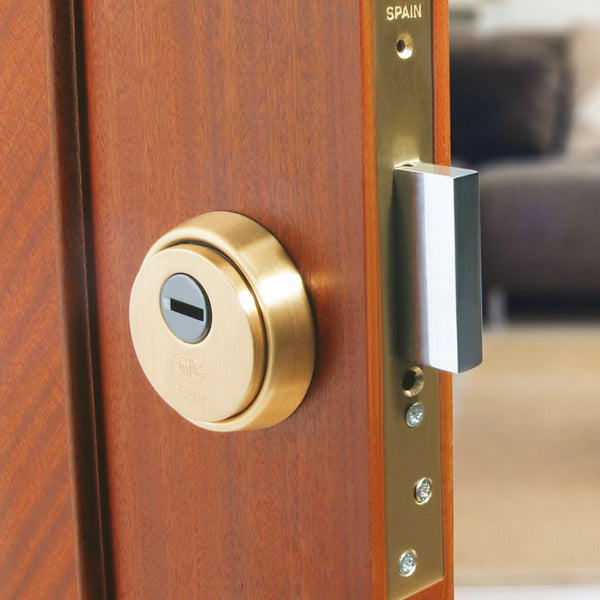
The protective escutcheon is a complementary, decorative, and essential security feature to prevent the cylinder from being tampered with from the outside of the door. All security escutcheons work for all doors, although it is true that there are escutcheons that will be recessed into the door and require a more involved installation, and escutcheons that are simply bolted on with through-bolts.


